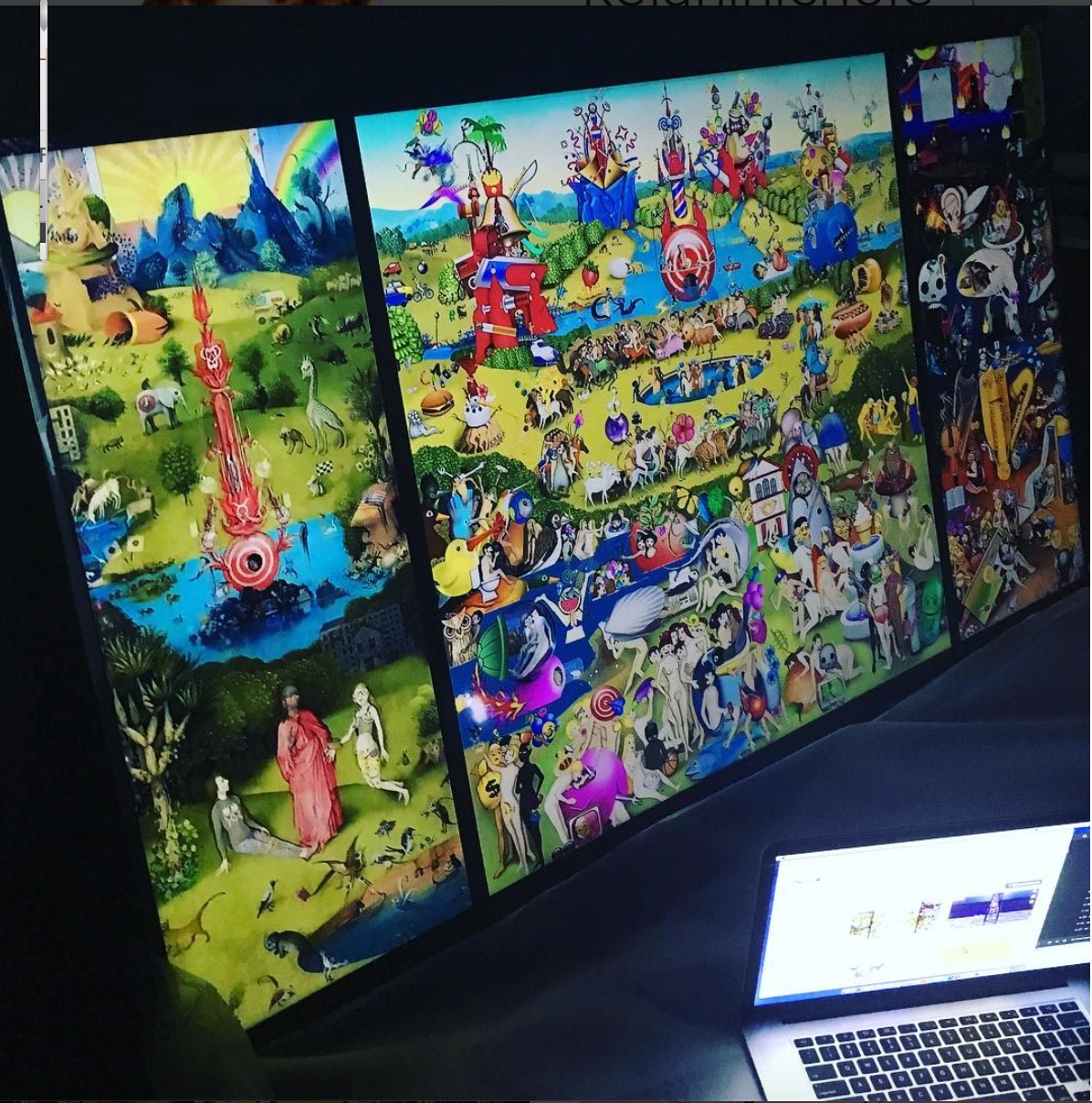
CEDIA is the world’s largest trade show dedicated exclusively to high-end residential technology and is the only show which brings the home tech industry together around connected technology.
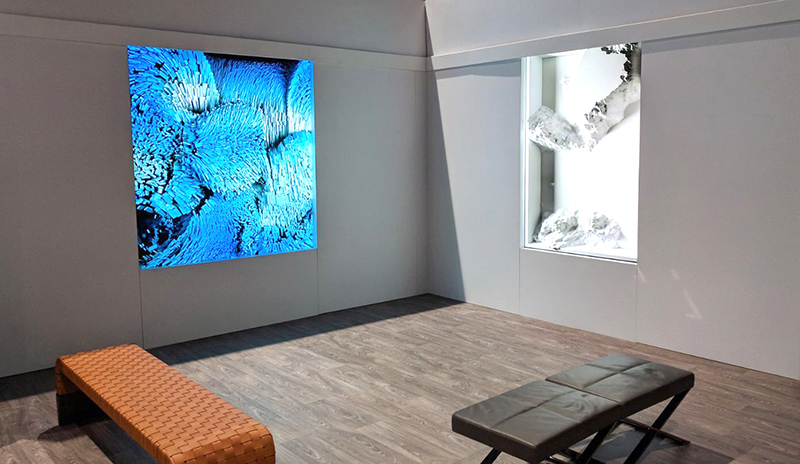
This was the perfect opportunity to announce our collaboration with Barco Residential, and to debut “LED Digital Art Canvases” which combine Barco’s world leading display technologies with Niio’s manage and display platform for video and media art.
Read more about our official partnership announcement here.
Interested in learning more about how Niio and Barco Residential can transform your home? Get in touch.
Ars Electronica is a festival for art, technology and society. This year Niio will have a significant presence at the festival.
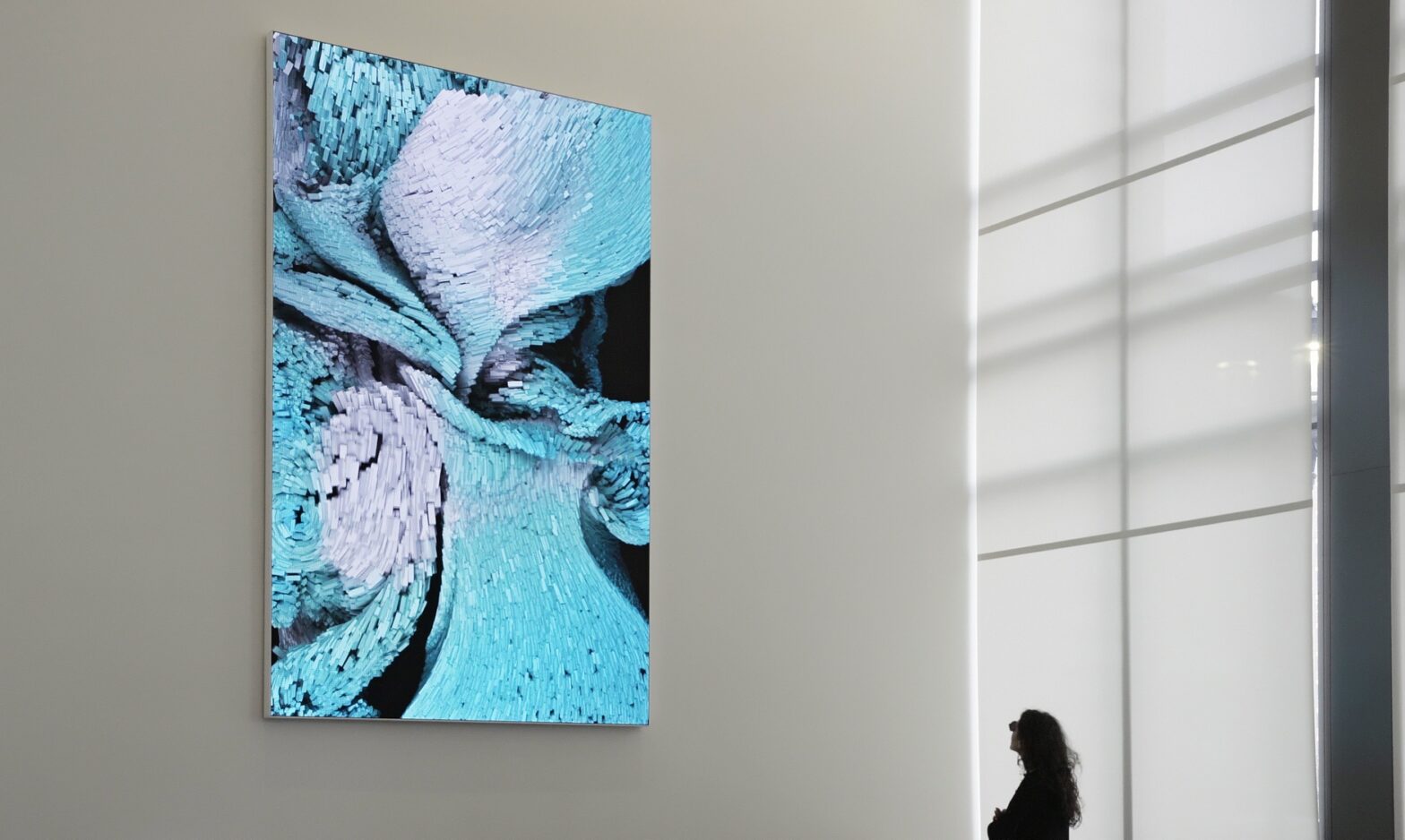
Together with our partner, Barco Residential, Niio will be powering a not-to-be-missed data art installation, ‘Wind of Linz’, by the talented Refik Anadol.
Winds of Linz by Refik Anadol
Commissioned by Ars Electronica, ‘Wind of Linz’ is a site-specific work that turns the invisible patterns of wind in and around the city of Linz into a series of poetic data paintings. By using a one-year data set, Refik Anadol Studios developed custom software to read, analyze and visualize wind speed, direction, and gust patterns along with time and temperature at 10-second intervals throughout the year.
The resulting artwork is a series of three dynamic chapters, each using data as a material to create a unique visual interpretation of the interaction between the environment and the city. Each chapter brings different aspects of the data sets to life with distinct and varied painterly, emotive aesthetics, making the invisible beauty of wind as a natural phenomenon visible.
More Places to Find Niio At Ars Electronica
Niio co-founder, Oren Moshe, will be part of several discussions and our team will have a presence at the Collectors Pavilion where we will be demonstrating Niio. Please come find us and introduce yourself.
Talks: September 7: 14:00 – 18:00 Media Art and the Art Market Collection management, distribution and display tools for new media art.
(*Each speaker will have 30 min followed by 10 min of Q+A)
Round Table Discussion:
September 9: 14:00 – 15:00 @ Gallery Space Media Art and the Art Market New technologies for presenting, collecting and storing media art.
For four days in September, the magic of Tel Aviv will be transported to London. Dubbed the ‘Miami of the Middle East’, this vibrant Israeli city is a rising cosmopolitan metropolis of food, art, fashion and nightlife.
Bringing the best of the city to the UK, TLV in LDN offers a unique opportunity to experience the rich cultural landscape of Tel Aviv in London.
Niio Manage™
This This year, TLVinLND selected theNiio Manage™ platform to power the festival’s media arts program from open call submissions all the way through to exhibiting a final selection of video works at the event.
Over 250 Israeli artists submitted art works to the Niio platform which were reviewed by curator Marie Shek and artist Ori Gersht. Six works were selected to be shown on dedicated screens at the 5 day event using theNiio ArtPlayer alongside additional curated selections from some of Israel’s leading artists.
TLVinLDN VIP EVENT: A New ToolBox, Where Technology & Art Connect
As part of the festival,Outset,Start-Up National Centraland thePaul Singer Foundation will be hosting an exclusive evening of “Art & Technology” in London for leading art world figures, where Niio will be presented as ‘the’ company to enable the global video and media art market.
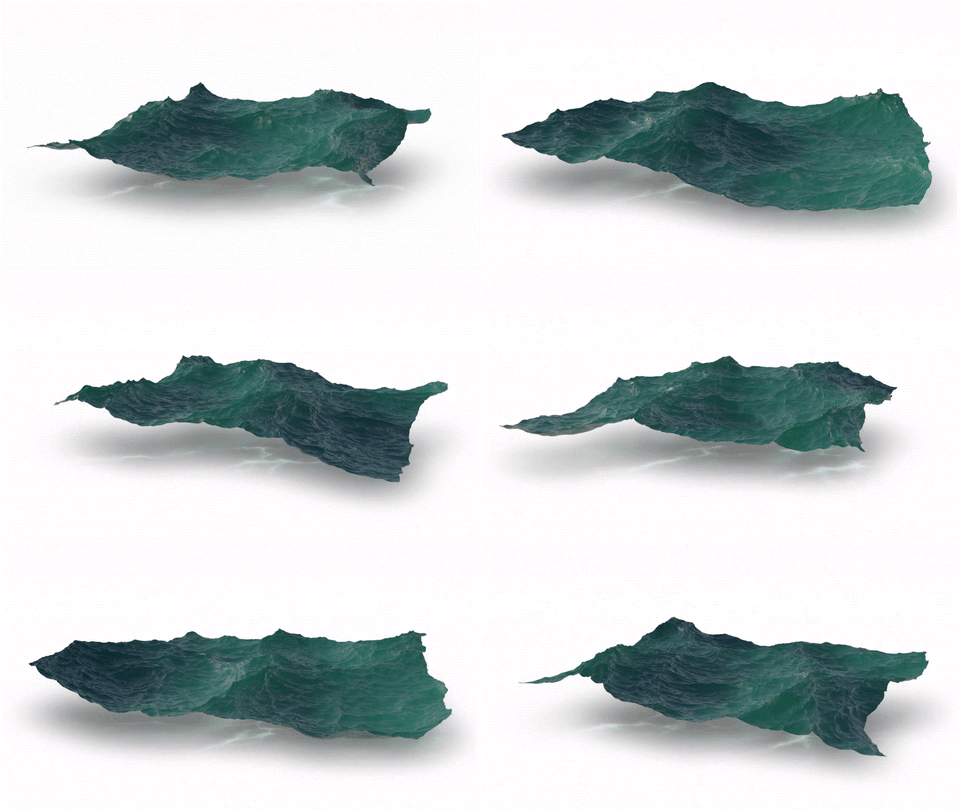
Featured image: Eyal Gever, Piece of Ocean, 2014. @eyalgever
It’s always refreshing to walk into an exhibit and to be greeted by video art. It’s even better when you get to the end and realize that that half of the show is comprised of multi-screen moving image works. Such was the case at the 14th Factory LA, a show we were lucky enough to catch right before it closed its doors after after 4 months and over 75,000 visitors.
‘The Inevitable’ by Simon Birch and Eric Hu with music by Gary Gunn. Read more about this incredible work inspired by a devastating medical diagnosis on Niio’s Instagram page.
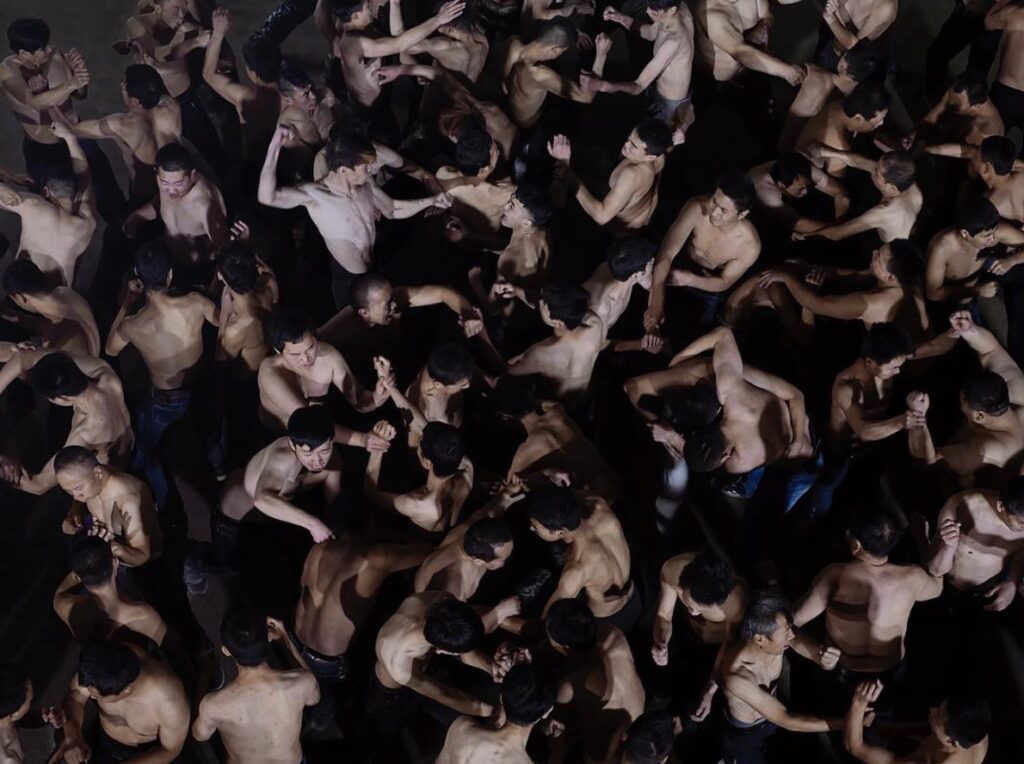
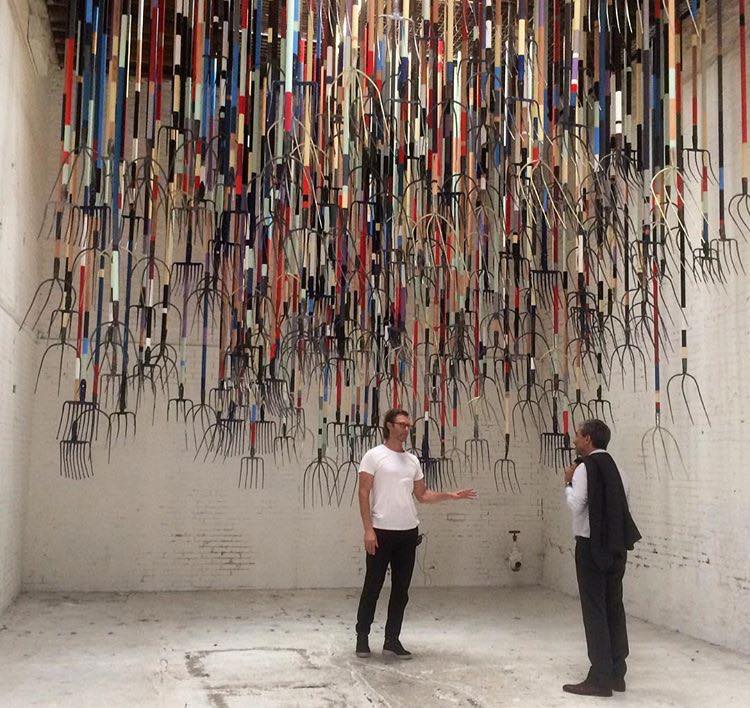
The 14th Factory LA was a monumental, multiple-media, socially engaged art and documentary experience conceived by the Hong Kong-based British artist Simon Birch. Taking over three acres of an empty industrial warehouse and lot on the outskirts of downtown Los Angeles, the location was transformed into a factory where Birch and his 20 creative collaborators worked and manufactured their art, creating an ever-changing immersive environment of 14 interlinked spaces comprised of video, installation, sculpture, paintings and performance.
Keep an eye on Simon Birch, he has some great projects on the horizon. You won’t want to miss them.
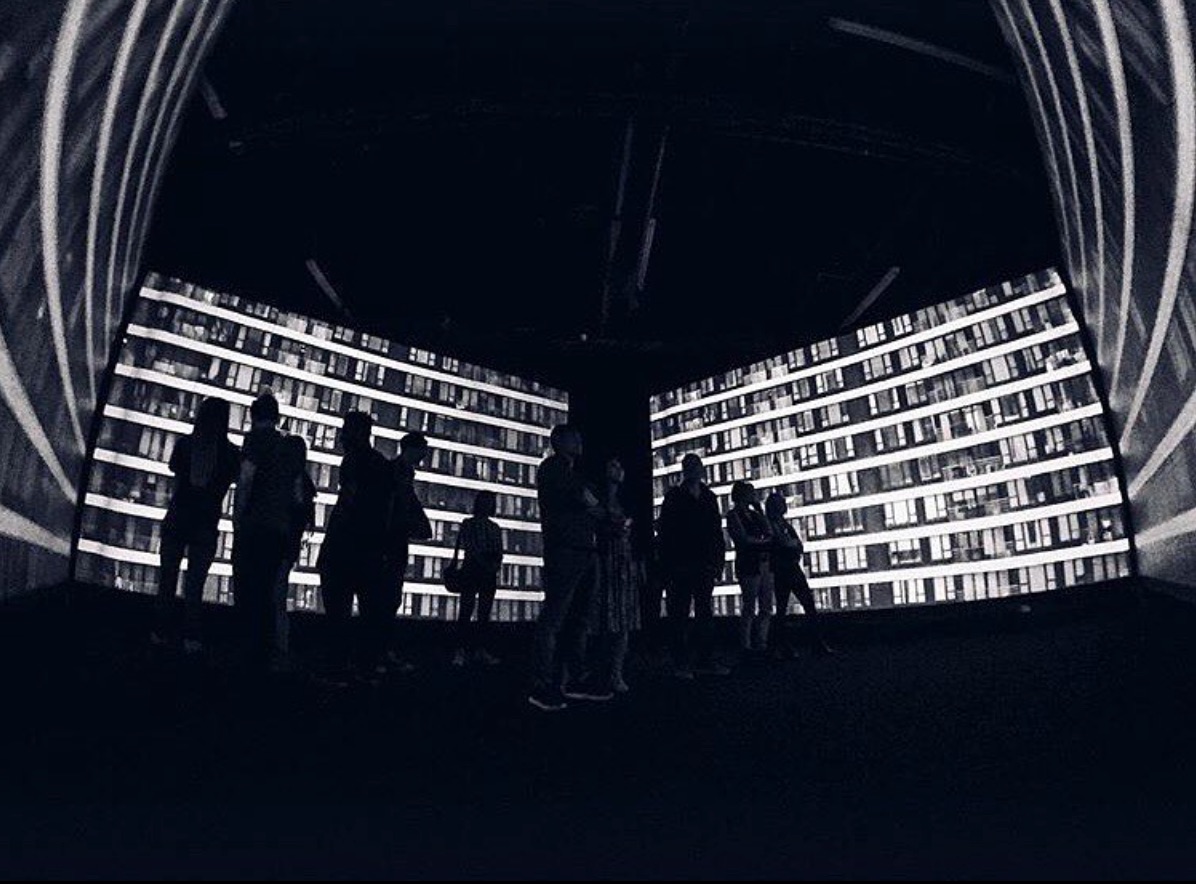
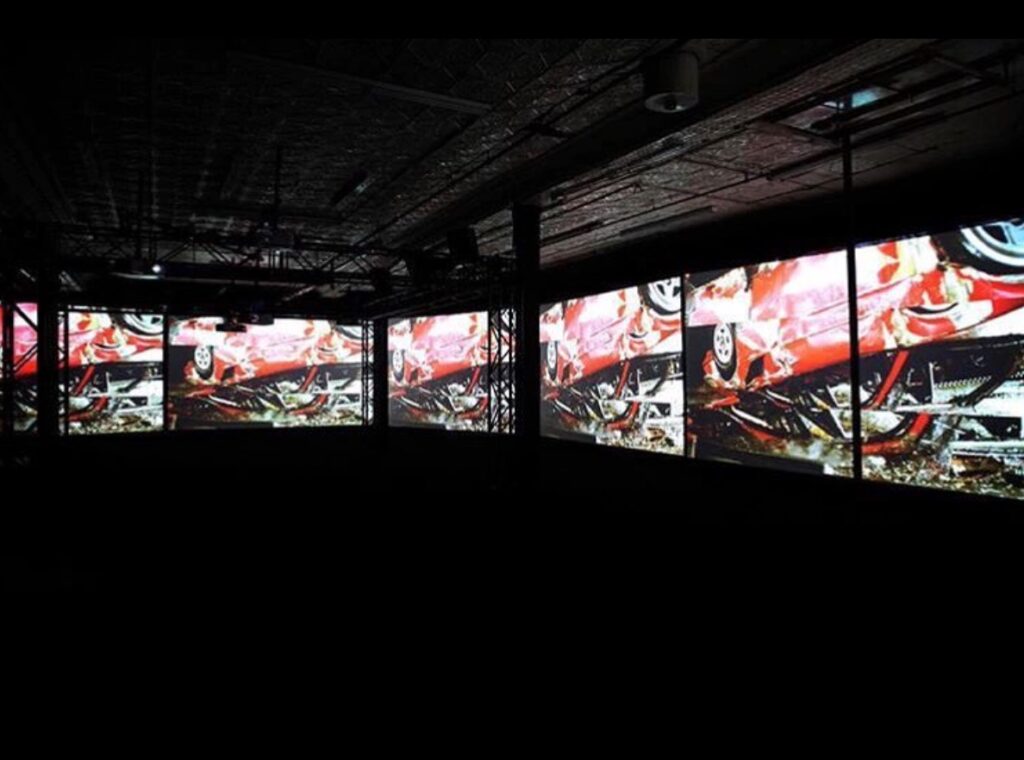
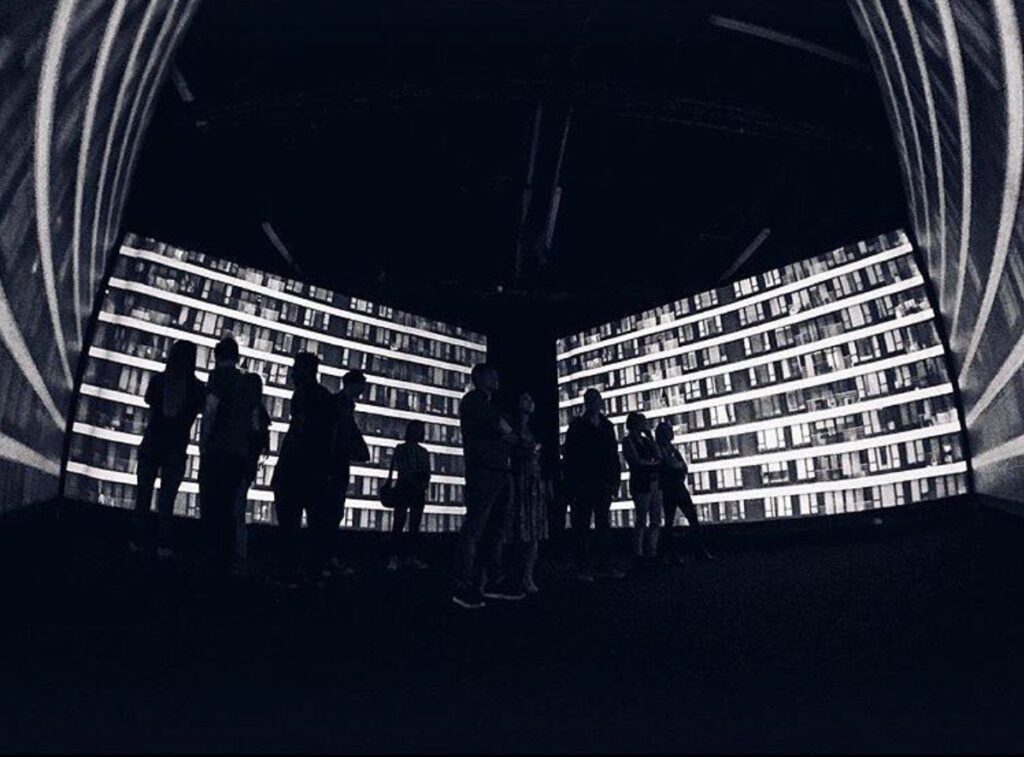
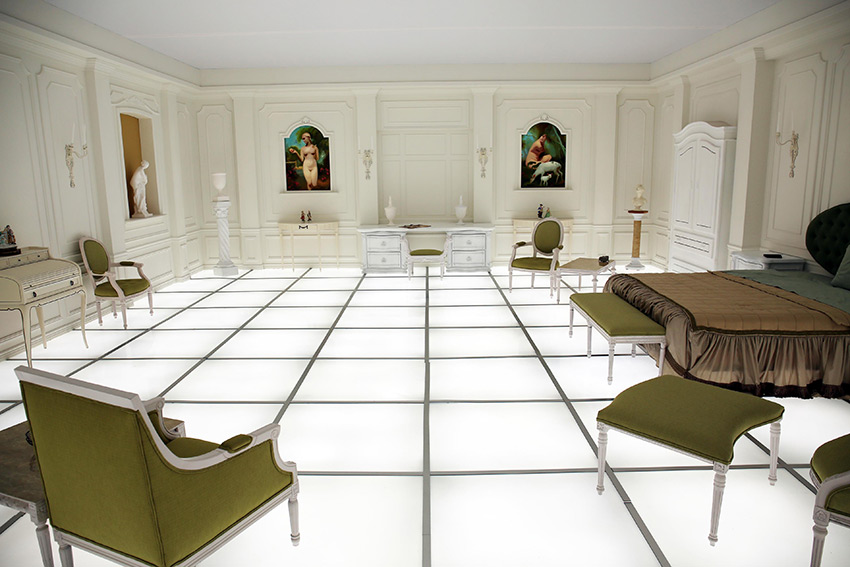
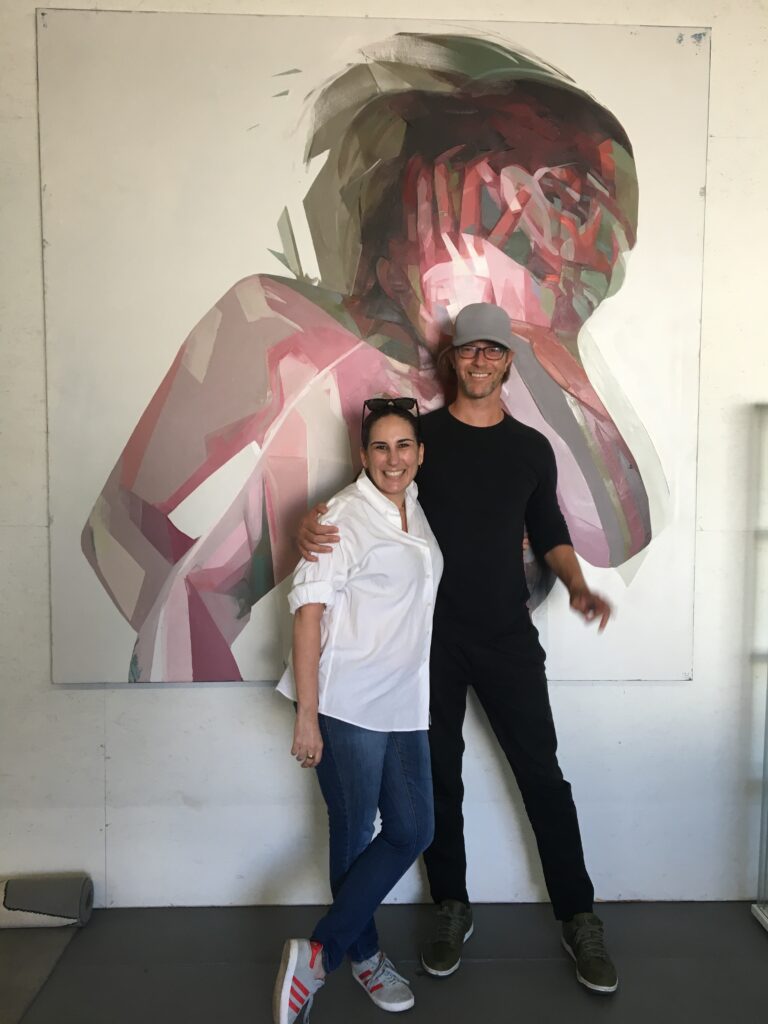
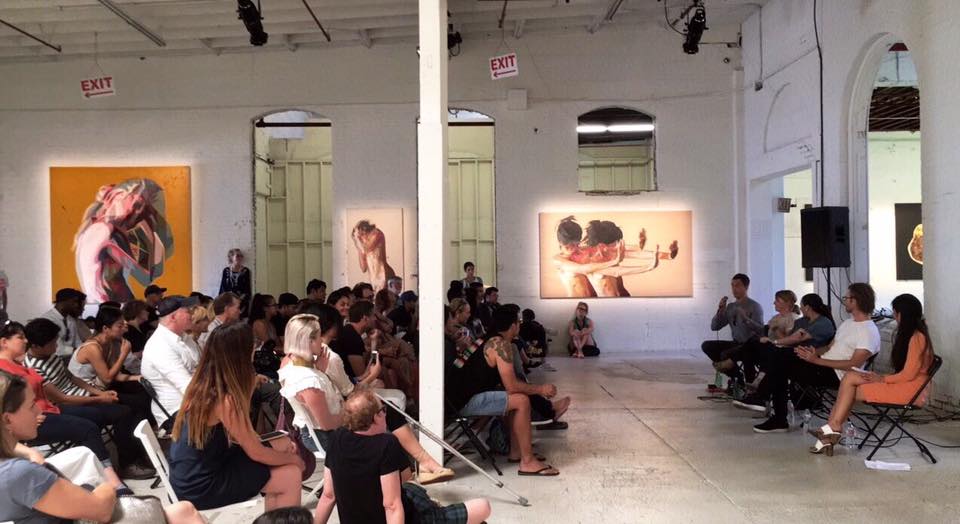
Simon Birch, ‘Tannhauser’, 2016. Realized by Scott Sporleder, Jennifer Russell, with sound design by Gary Gunn. 4-channel video featuring a Hong Kong cityscape. Still by Matthew Sebastian Wood.‘The Inhumans’ is a short film directed by Wing Shya in collaboration with Simon Birch.The ‘Barmecide Feast’ by Simon Birch and KPlusK Assoc. was a replica of The Otherworldly Bedroom from Stanley Kubrik’s 2001: A Space Odyssey.Simon Birch pictured with Michael Govan, the Director of LACMA. According to Birch, ‘The Crusher’ was in part a tribute to the legendary American wrestler Reginald Lisowski, The Crusher who inspired a 1960s pop song of the same name. Photo by VM Fernandez.Niio’s Margo Spiritus with the 14th Factory LA’s founder, Simon Birch in front of one of his paintings.Panel: The Art Experience in the Age of Social Media with 14th Factory’s Simon Birch, Niio’s Margo Spiritus, Venus Over Manhattan’s Aaron Moulton, Marissa Gluck and moderator Gloria Yu of 14th Factory LA.
When talking about digital art (art created with technology that’s often intended to be viewed or experienced on screens or projectors), inevitably people use a myriad of different terms. In order to help clarify, we’ve pulled together a glossary of terms.
Digital art is an artistic work or practice that uses digital technology as an essential part of the creative or presentation process. Today digital art itself is placed under the larger umbrella term new media art.
New media art refers to artworks created with new media technologies, including digital art, computer graphics, computer animation, virtual art, Internet art, interactive art, video games, computer robotics and 3D printing that can enable the digital production and distribution of art.
Video art is an art form which relies on moving pictures in a visual and audio medium. Video art came into existence during the late 1960s and early 1970s as new consumer video technology became available outside corporate broadcasting. Video art can take many forms: recordings that are broadcast; installations viewed in galleries or museums; works streamed online, distributed as video tapes, or DVDs; and performances which may incorporate one or more television sets, video monitors, and projections, displaying ‘live’ or recorded images and sounds.
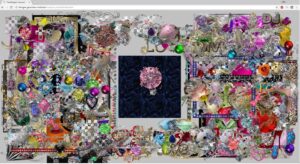
Internet art (often referred to as net art) is a term used to describe a process of making digital artwork made on and distributed by the Internet. This form of art has circumvented the traditional dominance of the gallery and museum system, delivering aesthetic experiences via the Internet. In many cases, the viewer is drawn into some kind of interaction with the work of art.
Blingee by Olia Lialina (artist) and Mike Tyka (Co-Founder of the Google Artist and Machine Intelligence Program) for Rhizome’s Seven on Seven ’17.
Software art is a work of art where the creation of software, or concepts from software, play an important role; for example software applications which were created by artists and which were intended as artworks.
Generative art refers to art that in whole or in part has been created with the use of an autonomous system. An autonomous system in this context is generally one that is non-human and can independently determine features of an artwork that would otherwise require decisions made directly by the artist.
Algorithmic art, also known as computer-generated art, is a subset of generative art (generated by an autonomous system) and is related to systems art (influenced by systems theory). For a work of art to be considered algorithmic art, its creation must include a process based on an algorithm devised by the artist. Here, an algorithm is simply a detailed recipe for the design and possibly execution of an artwork, which may include computer code, functions, expressions, or other input which ultimately determines the form the art will take.
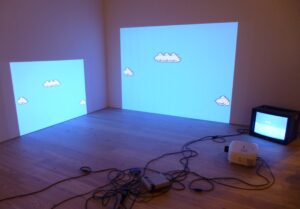
Video game art is a specialized form of computer art employing video games as the artistic medium. Video game art often involves the use of patched or modified video games or the repurposing of existing games or game structures, however it relies on a broader range of artistic techniques and outcomes than artistic modification and it may also include painting, sculpture, appropriation, in-game intervention and performance, sampling, etc.
Super Mario Clouds by Corey Arcangel as seen at the Whitney
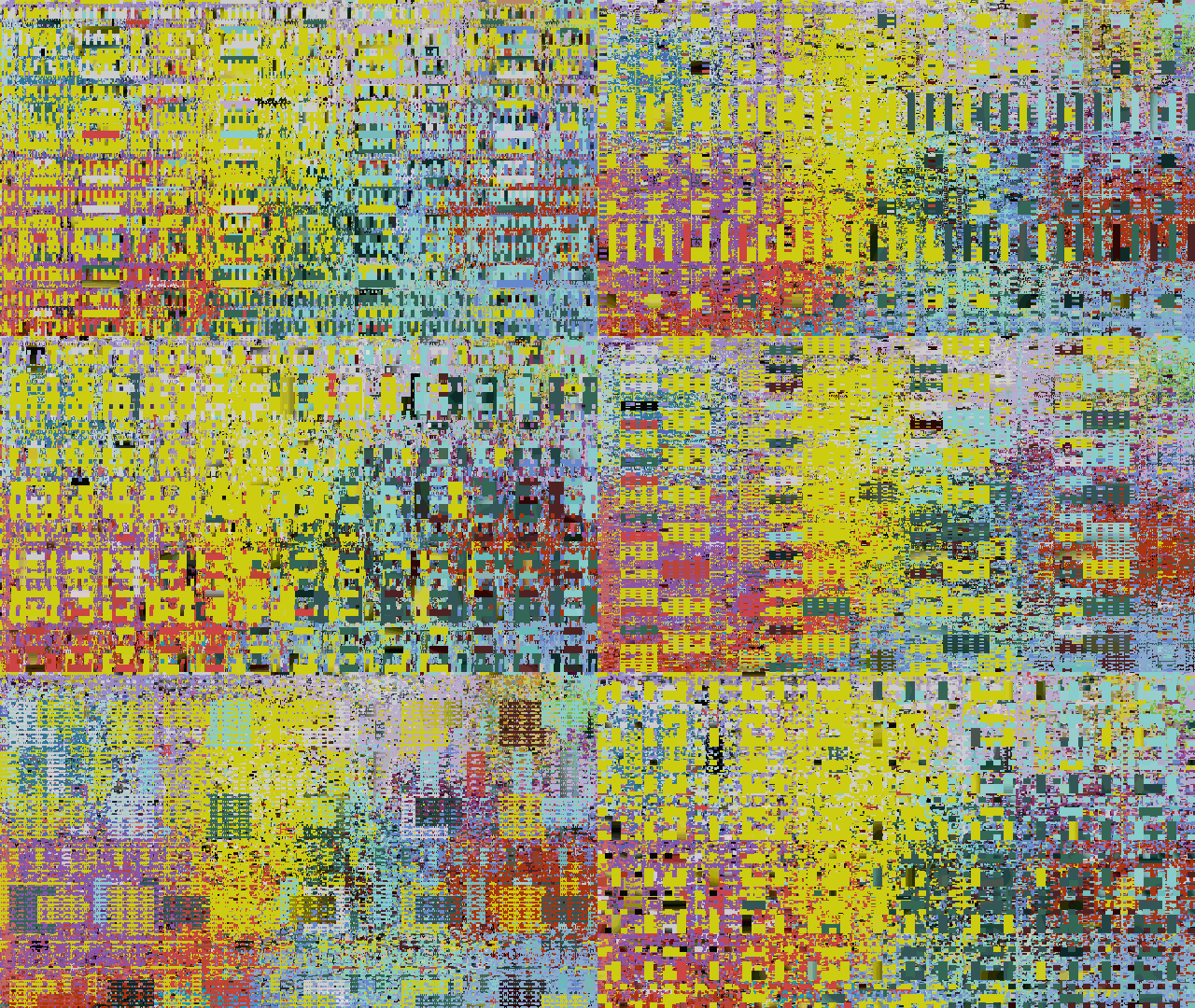
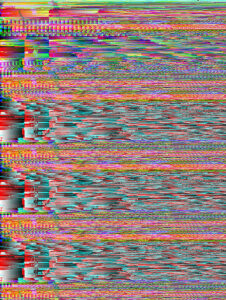
Glitch art is the practice of using digital or analog errors for aesthetic purposes by either corrupting digital data or physically manipulating electronic devices. In a technical sense, a glitch is the unexpected result of a malfunction, especially occurring in software, video games, images, videos, audio, and other digital artefacts.
Example of glitch art, by Rosa Menkman
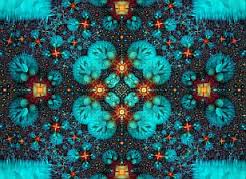
Fractal art is a form of algorithmic art created by calculating fractal objects and representing the calculation results as still images, animations, and media. Fractal art developed from the mid-1980s onwards. It is a genre of computer art and digital art which are part of new media art. The mathematical beauty of fractals lies at the intersection of generative art and computer art. They combine to produce a type of abstract art.
Fractal art.
Computer art is any art in which computers play a role in production or display of the artwork. Such art can be an image, sound, animation, video, CD-ROM, DVD-ROM, video game, website, algorithm, performance or gallery installation.
Multi-media art uses a combination of different content forms such as text, audio, images, animations, video and interactive content. Multimedia can be recorded and played, displayed, interacted with or accessed by information content processing devices, such as computerized and electronic devices, but can also be part of a live performance.
We all know what happens when content goes from analog-to-digital. In the case of music, we found ourselves tethered to our Ipods streaming Apple itunes in ‘01. When books went digital in ‘07, our Amazon Kindles became a necessity. That same year, we were finally able to stream our favorite Netflix movies. Soon after in ‘08, we were able to access our favorite TV shows on Hulu and our favorite music on Spotify.
It’s hard to imagine a time before we were able to enjoy the on-demand delivery of our favorite digital content yet in each case, in order to make that a reality, an entire ecosystem had to be developed to make the content easy to find, search, distribute and display.
The exact same thing is happening with art. What for centuries has been analog (paintings, drawings, sculptures etc.), has evolved to digital, made popular by artists’ easy access to sophisticated online tools.
Although digital art is already decades old (this year marks the 30th anniversary of the GIF), more and more artists are developing works meant to be experienced on screens and projectors yet they lack the tools needed to make that art available and accessible. How does an artist get a work from computer to wall to screen? How does someone discover a work of digital art?
With Niio, we aim to change all that so that anyone can experience digital art easily and simply, on-demand in any location, the same way you enjoy music, books, tv and movies.
Want to find out more about how you can find the world’s best digital art and instantly transform your space? Email us at [email protected] to find out more.